
When families start researching home care options, one of the most common points of confusion is the difference between a “home nurse” and a “nursing attendant.” The terms are often used loosely, and sometimes even interchangeably by agencies that aren’t fully transparent, but the two roles are actually quite different in terms of training, capability, and the type of care they can safely provide.
Understanding this difference is essential for choosing the right support for your loved one. Here’s a clear breakdown.
The Core Difference in One Line
A nursing attendant provides daily living and personal care support, while a registered home nurse provides clinical, medical-grade care. One is trained in caregiving; the other is trained and licensed in medical procedures.
What Is a Nursing Attendant?
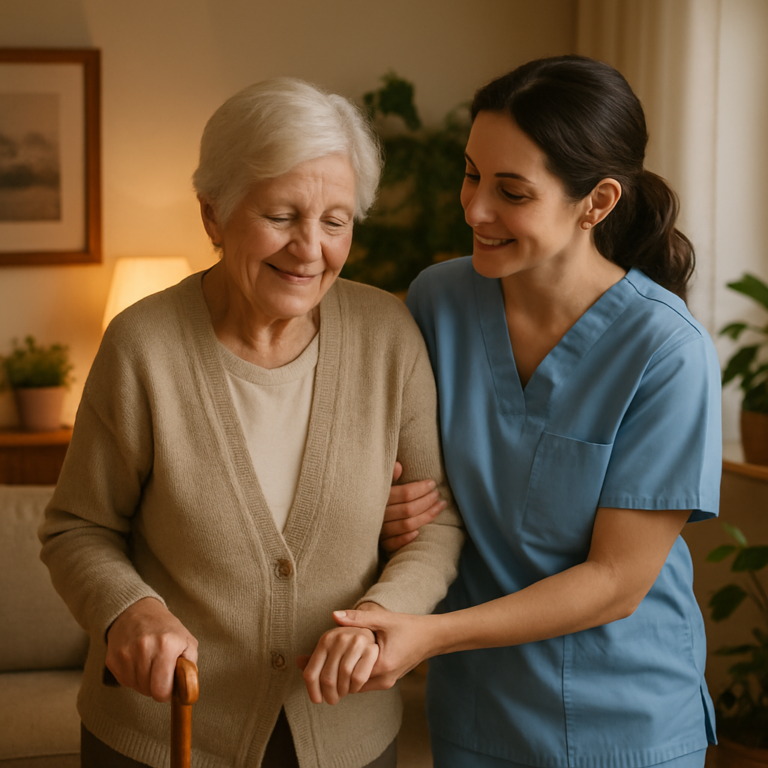
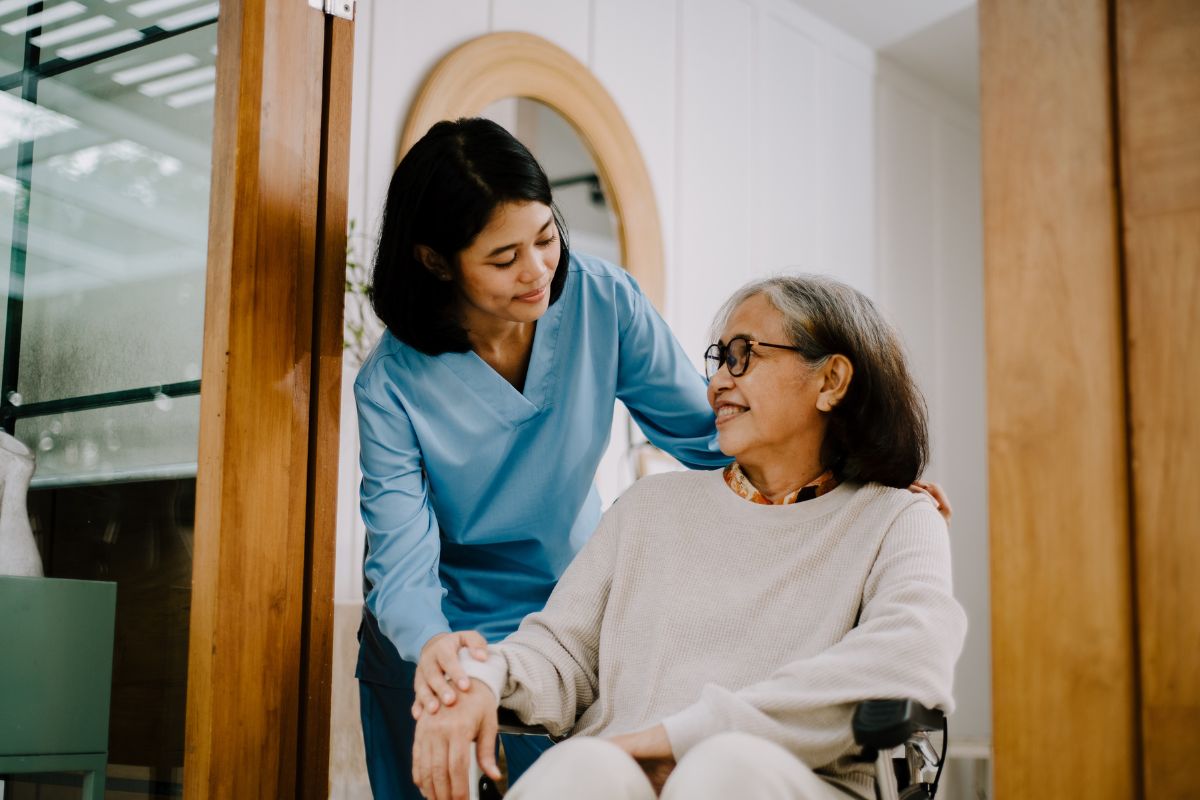
A nursing attendant, also called a General Duty Assistant (GDA) or caregiver, is trained to support patients with activities of daily living but is not licensed to perform medical procedures.
Typical Responsibilities of a Nursing Attendant:
- Assistance with bathing, dressing, and grooming
- Feeding support
- Mobility assistance and repositioning
- Toileting and hygiene support
- Companionship and emotional support
- Basic monitoring and reporting changes to family or nurse
Training Background:
Nursing attendants typically complete a short-term caregiving or GDA certification course, focused on patient handling and daily care, not clinical medical training.
What Is a Home Nurse?
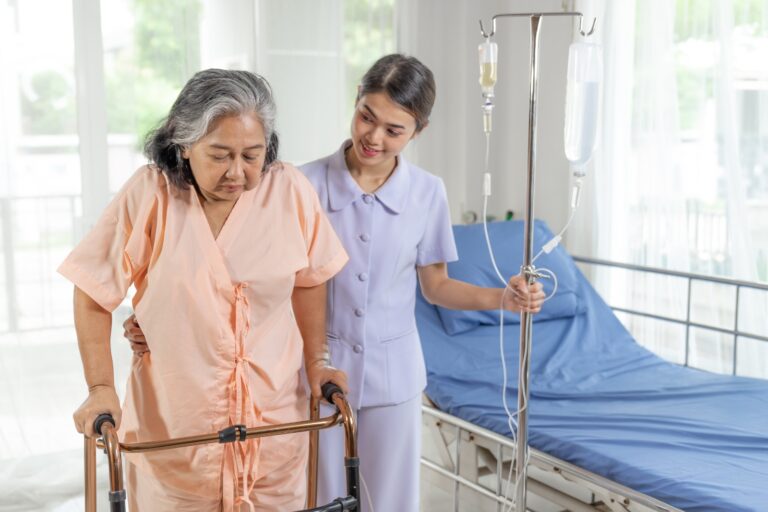
A home nurse is a registered, licensed medical professional — typically GNM (General Nursing and Midwifery) or ANM (Auxiliary Nurse Midwifery) qualified — trained to provide clinical care equivalent to what you’d receive in a hospital, delivered at home.
Typical Responsibilities of a Home Nurse:
- Wound dressing and post-surgical care
- Administering injections and IV medications
- Catheter, Ryle’s tube, and tracheostomy care
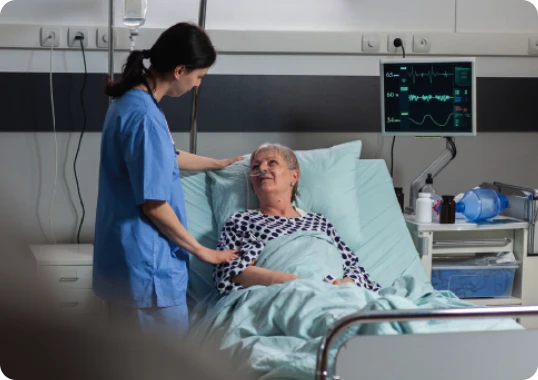
- Monitoring vitals (blood pressure, oxygen, pulse, temperature)
- Managing ventilator or BiPAP support (for critical care-trained nurses)
- Recognizing and responding to medical complications
- Coordinating with the treating doctor on care decisions
Training Background:
Registered nurses complete a formal, government-recognized nursing education program (GNM/ANM), including clinical training in hospitals, and are registered with a State Nursing Council.
Side-by-Side Comparison
| Medical procedures (injections, IV, wound care) | Not authorized | Trained and authorized |
| Daily living support (bathing, feeding, mobility) | Primary role | Can assist, but not primary focus |
| Vitals monitoring | Basic observation only | Clinical monitoring and interpretation |
| Formal licensing | Short-term certification | Government-registered nursing qualification |
| Best suited for | Companionship, elderly daily care, non-medical support | Post-surgical care, chronic illness, critical care, wound management |
| Typical cost | Lower | Higher, reflecting clinical training |
Which One Does Your Family Need?
Choose a Nursing Attendant If:
- Your loved one needs help with daily activities like bathing, dressing, or mobility.
- There are no complex medical procedures involved (no wounds, tubes, or injections).
- The primary need is companionship and supervision, especially for elderly patients living alone.
Choose a Home Nurse If:
- Your loved one has a wound that needs regular dressing
- Medication needs to be administered via injection or IV
- There’s a catheter, feeding tube, or tracheostomy requiring care
- Vitals need to be monitored and interpreted clinically
- The patient is recovering from surgery or managing a critical illness
Choose Both (Combined Care) If:
Many families — especially those with bedridden or critically ill patients — benefit from a combined care model, where a nurse manages clinical tasks during scheduled visits or shifts, while an attendant provides continuous daily support and companionship.
Common Mistakes Families Make
- Hiring an attendant for medical tasks they aren’t trained for — this can lead to improper wound care, missed complications, or medication errors
- Paying nurse-level rates for attendant-level service — always verify actual qualifications, not just job titles
- Assuming one role can fully replace the other — for complex cases, both roles often need to work together
- Not asking for proof of qualification — always request registration details for anyone labeled a “nurse”
How to Verify Who You’re Actually Hiring
Before hiring, ask the agency directly:
- Is this person a GDA/attendant or a GNM/ANM registered nurse?
- Can I see proof of their qualification or registration?
- What specific medical tasks are they trained and authorized to perform?
- If my loved one’s needs are mixed (daily care + medical care), can you provide both an attendant and a nurse?
A transparent agency will answer these clearly, without trying to blur the distinction to make a sale.
How Caremate Homecare Helps You Choose Correctly
At Caremate Homecare, we never blur the line between attendants and nurses. Our approach includes:
- Clear role clarity — you’ll always know whether you’re hiring a GDA attendant or a registered nurse
- Verified qualifications for every staff member, shared transparently with families
- Combined care plans where both a nurse and attendant work together for comprehensive support
- Free consultation to assess your loved one’s actual needs, so you hire the right type of support from the start — not too little, not unnecessarily more
Frequently Asked Questions
1. Can a nursing attendant give injections or change dressings?
No, these are clinical tasks that require a registered nurse. Attendants are trained for daily living support, not medical procedures.
2. Is a home nurse more expensive than an attendant?
Generally yes, reflecting their formal medical training and ability to perform clinical procedures.
3. Can I hire both an attendant and a nurse for the same patient?
Yes, this is common for bedridden or medically complex patients — the nurse handles clinical care while the attendant provides continuous daily support.
4. How do I confirm someone is actually a registered nurse?
Ask for their GNM/ANM registration details. A reliable agency will provide this without hesitation.
Hire the Right Type of Care for Your Loved One
Choosing between a nursing attendant and a home nurse doesn’t have to be confusing. Caremate Homecare helps you understand exactly what your loved one needs — and provides verified, qualified staff to match.
Call us at 8910962496 for a consultation to determine the right type of care for your family.