
Total Knee Arthroplasty (TKA), commonly known as knee replacement surgery, is a highly successful procedure, but the surgery itself is only half the battle. The true success of your new joint depends entirely on your post-operative rehabilitation.
If you or a loved one are recovering from a knee replacement in Kolkata, one of the first questions you will ask is: “How many physiotherapy sessions are actually necessary?”
The short answer is that there is no universal number. However, a typical, uncomplicated recovery requires structured physical therapy sessions spanning 6 to 12 weeks, averaging 2 to 3 sessions per week. Let’s break down exactly what dictates this timeline and what each phase looks like.
Factors That Determine Your Recovery Timeline
Your physical therapy protocol is unique to your body. A clinical team will map out your sessions based on:
- Pre-surgery joint condition: If the knee was severely deformed or muscle wasting was present due to advanced osteoarthritis, rehabilitation takes longer.
- Surgical technique: A unilateral (single knee) replacement recovery differs significantly from a bilateral (both knees) simultaneous replacement.
- Comorbidities: Conditions like diabetes, hypertension, or severe osteoporosis can alter the healing speed of soft tissues.
The Phases of Post-Knee Replacement Physical Therapy
A scientifically backed recovery plan is divided into milestones, rather than just a count of days.
Phase 1: The Initial Mobilization (Weeks 1 to 2)
- Frequency: 3 to 4 times a week (ideally through home physiotherapy to prevent painful travel).
- Clinical Focus: Managing inflammation, preventing Deep Vein Thrombosis (DVT), and achieving initial knee flexion (bending) up to 90 degrees.
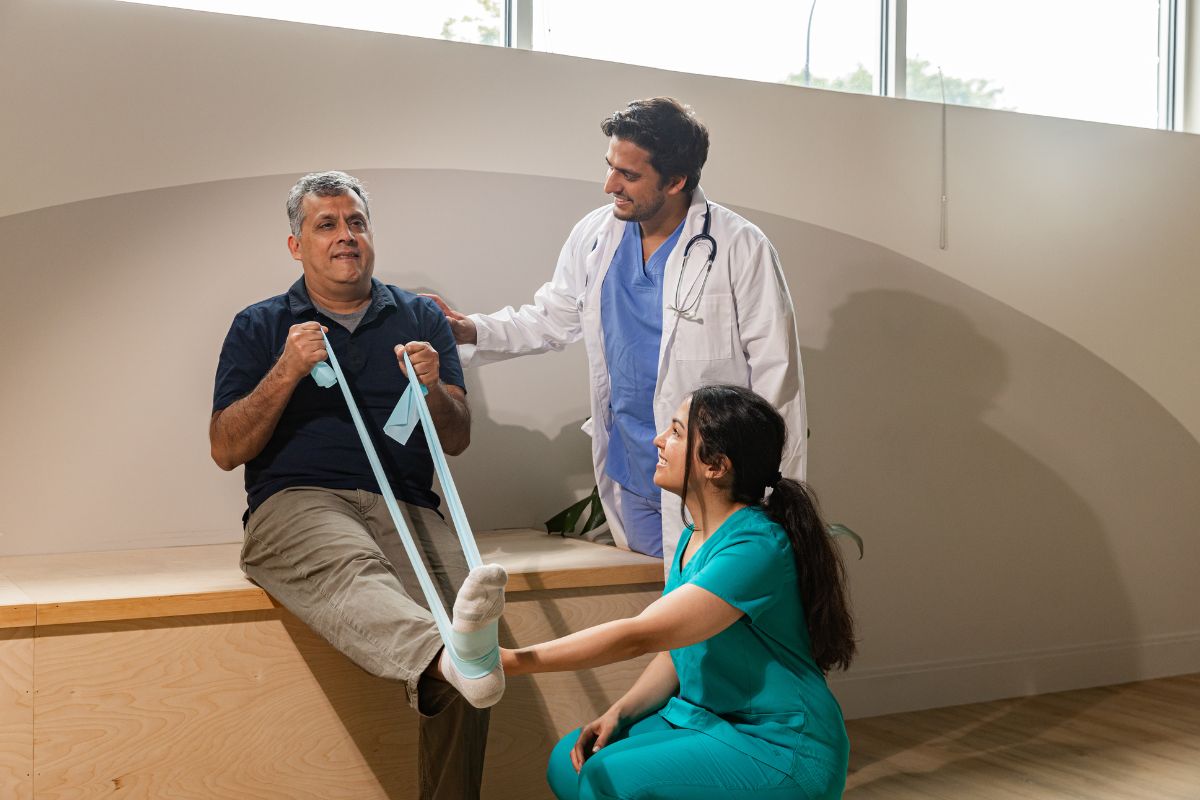
- Core Exercises: Ankle pumps, static quadriceps sets, and straight leg raises.
Phase 2: Building Range of Motion & Strength (Weeks 3 to 6)
- Frequency: 2 to 3 times a week.
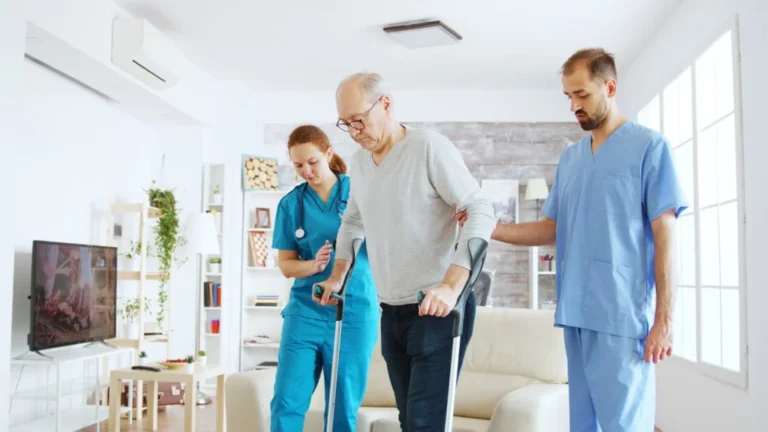
- Clinical Focus: Graduating from a walker to a walking stick, increasing knee flexion to 110–120 degrees, and restoring normal gait (walking patterns).
- Core Exercises: Heel slides, stationary cycling movements, and mini-squats.
Phase 3: Advanced Functional Independence (Weeks 7 to 12)
- Frequency: 1 to 2 times a week.
- Clinical Focus: Balance training, climbing stairs comfortably, and returning to everyday household activities without pain.
Why Home Physiotherapy is Crucial in Kolkata
Traveling across Kolkata’s uneven roads, dealing with unpredictable traffic, or managing monsoon waterlogging can be physically damaging to a healing surgical wound. Opting for specialized home physiotherapy ensures that a qualified physiotherapist works with the patient in a controlled environment, using the home’s layout to practice real-world movements like sitting on a specific sofa or climbing local steps safely.