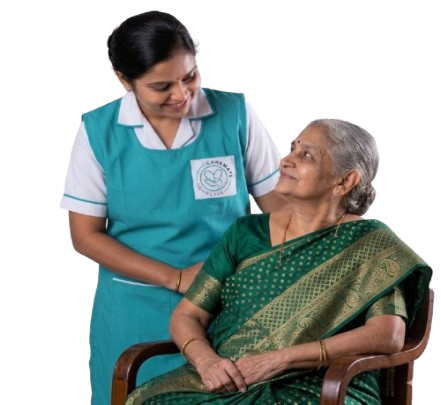


When a loved one has passed the acute phase of a serious illness but still needs round-the-clock medical monitoring, the question every family faces is: do we keep paying for a hospital bed, or can we bring them home safely?
For many patients — those recovering from stroke, cardiac surgery, neurological events, COPD exacerbations, or long-term ventilator dependence — high-quality critical care can be delivered at home at a fraction of the hospital cost, with the added benefit of a familiar, infection-free environment.
Caremate Homecare’s ICU care at home service in Kolkata brings trained critical care nurses, medical-grade equipment, and a structured clinical protocol to your doorstep — so your family member can continue receiving the care they need, in the place where they heal best.
Home ICU care is a professional medical service that replicates the key monitoring and nursing functions of a hospital ICU — but in the patient’s home. It is not a basic nursing arrangement. It involves:
This service is appropriate when the patient is medically stable but still requires a level of care and monitoring that a general home nurse or attendant cannot provide.
Home critical care is recommended — and in many cases actively advised by doctors — for the following patient profiles:
Post-Stroke Patients
Stroke survivors in the recovery phase often need vital sign monitoring, position management to prevent bedsores, physical support, and medication administration. Home ICU care provides this continuously.
Cardiac Surgery Recovery
Patients discharged after bypass surgery or valve replacement need careful monitoring of heart rate, blood pressure, oxygen saturation, and wound management. Our critical care nurses are trained for cardiac post-operative protocols.
Neurological Conditions
Patients with traumatic brain injury, Guillain-Barré syndrome, or severe Parkinson’s who require positioning support, airway management, and close neurological observation.
Respiratory-Dependent Patients
Patients on home ventilators, BiPAP, or oxygen concentrators need trained nursing support to manage the equipment safely and respond to alarms or changes in condition.
Oncology and Palliative Care Patients
Cancer patients in advanced stages or those undergoing palliative care at home need pain management, medication administration, wound care, and compassionate nursing support.
Organ Transplant Recovery
Post-transplant patients at home require careful medication management, infection monitoring, and clinical observation for early signs of rejection.
Prolonged Bedridden States
Patients with severe immobility due to paralysis, neurological damage, or degenerative disease need comprehensive bedsore prevention, feeding support, catheter care, and physiotherapy coordination.
Every home ICU setup is individually assessed by our clinical team and tailored to the patient’s specific condition. Standard components may include:
Equipment is selected based on the clinical assessment and may include:
All equipment is delivered, installed, and tested by our team before the patient arrives home from the hospital.
Our critical care nursing team follows structured protocols for:
Before care commences, our team trains the family on:
|
Factor
|
Hospital ICU
|
Caremate Home ICU
|
| Cost per day | ₹10,000–₹30,000+ | Significantly lower — call for quote |
| Infection risk | Higher (hospital-acquired infections) | Lower (familiar home environment) |
| Family presence | Restricted visiting hours | Family present at all times |
| Patient comfort | Clinical and unfamiliar | Home environment, personalised |
| Nurse-to-patient ratio | Often 1:3 or 1:4 | Dedicated 1:1 nursing at all times |
| Recovery outcomes | Standard | Studies show better outcomes in familiar settings for stable patients |
The transition from hospital to home ICU is carefully managed to ensure no gap in care:
Step 1 — Clinical Assessment
Our senior nurse or clinical coordinator visits the patient in the hospital (or at home if already discharged) to assess their clinical needs, dependency level, and equipment requirements.
Step 2 — Care Plan and Equipment Selection
Based on the assessment, we prepare a detailed care plan and identify the exact equipment required. We coordinate directly with the patient’s treating physician if needed.
Step 3 — Home Preparation
We advise the family on the room setup requirements — space needed, power point access, access for caregivers — and arrange equipment delivery before the patient arrives home.
Step 4 — Equipment Installation and Testing
Our team installs, tests, and calibrates all equipment before the patient is brought home, so the home is clinically ready on arrival.
Step 5 — Handover from Hospital
If the patient is being discharged from hospital, we coordinate the handover — reviewing discharge notes, medications, and specialist instructions with the hospital team.
Step 6 — Care Commencement
Round-the-clock nursing care begins from the moment the patient arrives home. Our nurses document vitals, administer medications, and maintain continuous care.
Step 7 — Ongoing Review
We provide regular written updates to the family and coordinate follow-up appointments or doctor visits as required.
Caremate’s critical care at home service is available across Kolkata and nearby areas including:
Salt Lake City | New Town | Rajarhat | Ballygunge | Alipore | Park Street | Bhowanipore | Tollygunge | Jadavpur | Behala | Dum Dum | Barasat | Garia | Sonarpur | Dhakuria | Gariahat | Lake Town
Q: What types of patients can receive ICU care at home?
Home ICU care is suitable for patients who are medically stable but still require intensive monitoring and nursing support — including stroke survivors, post-cardiac surgery patients, ventilator-dependent patients, those in palliative care, and patients recovering from major neurological events. Your treating doctor will confirm suitability.
Q: Can a ventilator-dependent patient be managed at home?
In many cases, yes. Patients on home ventilators or BiPAP can be managed at home with trained critical care nurses and the right equipment. This requires a thorough clinical assessment first. Please call us to discuss your specific situation.
Q: What are the qualifications of your critical care nurses?
Our critical care nurses hold GNM or BSc Nursing qualifications and have specific ICU or critical care training and experience. All nurses are background-verified and regularly trained in updated critical care protocols.
Q: How quickly can you set up home ICU care after a hospital discharge?
With sufficient notice (24–48 hours), we can have equipment installed and nurses in place before your family member arrives home. For urgent cases, please call us as early as possible to begin the assessment process.
Q: Is a doctor involved in the home ICU care?
Our critical care nurses work under the supervision of the patient’s treating physician. We coordinate with your doctor on the care plan and escalate any clinical concerns immediately. Doctor home visits can also be arranged if required as a separate service.
Q: What happens if there is a medical emergency at home?
Our nurses are trained to identify and respond to early warning signs before they become emergencies. If a situation requires hospital-level intervention, our team is trained to initiate emergency protocols and coordinate transfer to a hospital immediately.
Q: Is home ICU care covered by health insurance in India?
Some insurance providers in India now cover home hospitalisation and home ICU care as part of their policies. This varies by insurer and policy. We recommend checking with your insurance provider. We can provide all necessary clinical documentation to support your claim.
Q: How much does ICU care at home cost in Kolkata?
The cost depends on the level of nursing required, equipment needed, and duration of care. Home ICU care is substantially less expensive than hospital ICU per day. Call us for a specific quote based on your family member’s clinical requirements — we are fully transparent about charges.
Q: Can family members stay with the patient during home ICU care?
Yes — and this is one of the greatest advantages of home ICU care. Family members can be present with the patient at all times, which significantly improves emotional wellbeing and recovery outcomes.
Q: Do you provide a written care report to the family and the treating doctor?
Yes. Our nurses maintain daily nursing notes documenting vitals, medications administered, clinical observations, and any changes in condition. These are shared with the family and available for the treating physician.
For critical care needs, timing matters. Call Caremate Homecare on 891-096-2496 now to speak with our clinical team and start the assessment process.



Qualified critical care nurses with ICU and HDU experience.

Hospital-level ICU care at home and regular written clinical updates for the family.

Transparent care plans co-created with the patient's treating doctor.
With Caremate, you save time, costs, and hassles of travel.

24/7 availability including nights, weekends, and holidays

Reach us for critical care services through multiple modes.